ServicesTrack & Sill Cleaning
Window Track and Sill Cleaning in Harleyville
Dirty tracks make windows stick, hold moisture and send grime back onto clean glass. We look at every track and sill first, tell you plainly what we find, then clean them by hand down to the drain slots.
What track and sill cleaning actually fixes
The track is the channel a sash slides in, and the sill is the ledge below it. Both collect what the glass sheds: pollen, sand, dead insects, paint flecks and the gray film left when rain runs off the frame. Over time that buildup packs into corners where a quick wipe never reaches.
It matters for more than looks. Packed grit grinds against rollers and seals, so windows drag and wear faster. Most vinyl and aluminum frames also have small weep holes in the bottom of the track that let water drain outside. When those clog, water sits in the channel, and in a humid Lowcountry summer that standing water turns to mildew quickly.
We start every visit by checking the tracks, not by quoting a package. You hear what we see before we touch anything.
What we do at each window
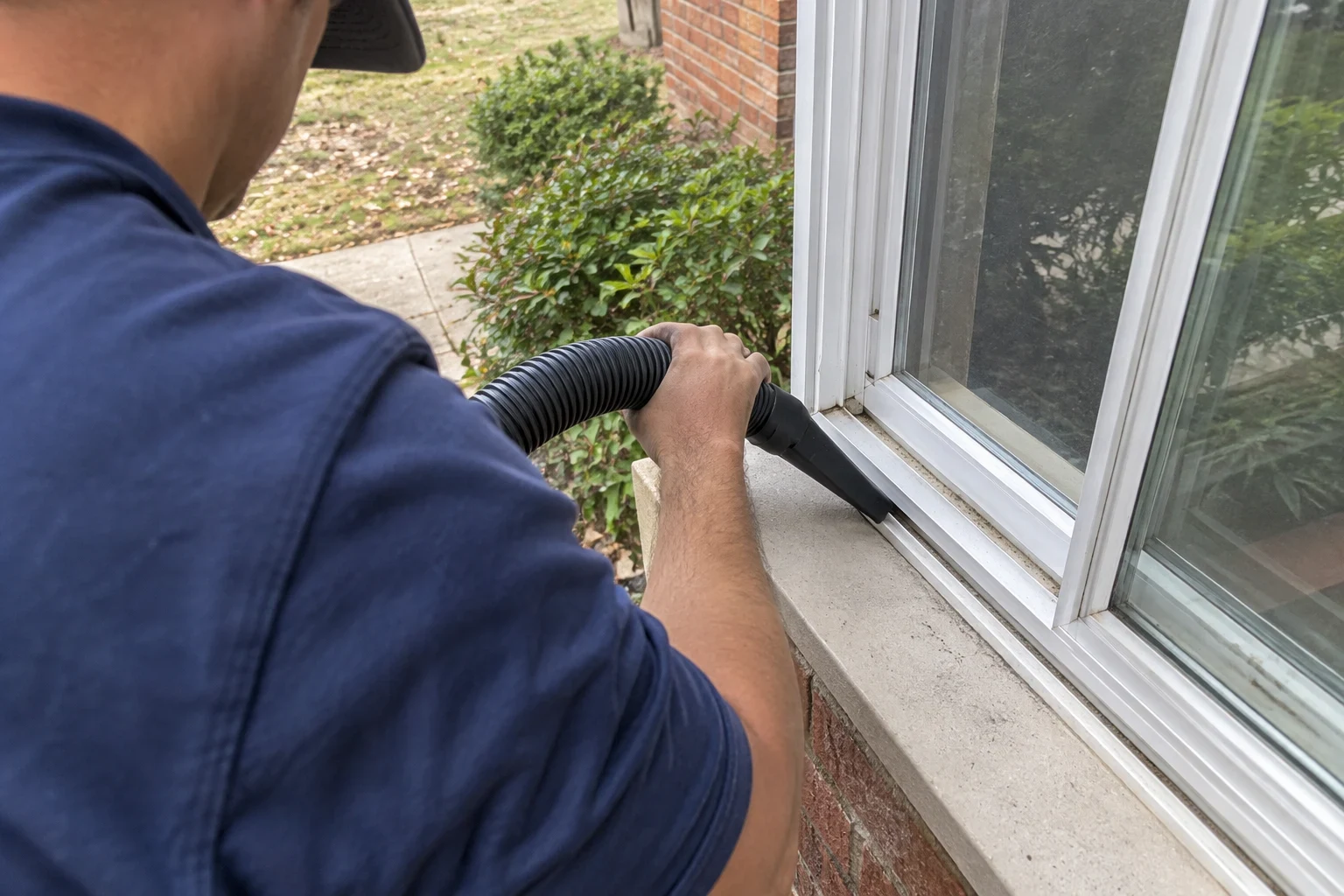
- Dry vacuum first
- We pull out loose sand, leaves and insects with a narrow vacuum before any water goes in. Wetting dry grit first just turns it into mud that settles deeper into the corners.
- Corner and channel detailing
- Soft brushes and thin tools work the dirt out of the tight corners and ridges of the track. This is slow, hand work, and it is where most of the difference shows.
- Mildew wash
- A mild cleaning solution lifts black mildew and gray film from vinyl, aluminum and painted wood. We match the product to the material so finishes are not dulled or stripped.
- Weep holes opened
- We locate each drain slot, clear it with a fine tool and run a little water through to confirm it drains outside.
- Sills wiped and dried
- Exterior sills are washed and dried by hand. On painted wood we work gently and note any peeling or soft spots rather than scrubbing at them.
- A slide test
- We open and close each sash after cleaning and tell you if one still drags.
Signs your tracks need attention
Windows that stick or grind
If a sash catches or you hear grit as it moves, debris is likely sitting under the rollers or along the channel.
Black spots in the corners
Dark speckling in the track corners is usually mildew feeding on trapped moisture and organic debris.
Water standing after rain
Puddles that linger in the bottom of the track point to blocked weep holes. Left alone, that water can find its way past seals.
Fresh glass that won't stay clean
When dirty tracks sit right under clean glass, every breeze and splash carries grime back up. It is often the missing step after residential window cleaning.
A yellow film each spring
Heavy pine pollen settles into tracks and turns gummy with humidity, which makes it harder to remove the longer it sits.
What shapes the price
We price after we know what the tracks look like, because a lightly dusty channel and one packed with years of grit are very different jobs. You get your quote by phone first, then we confirm it once we have seen the windows, so nothing changes without you hearing why.
Number of windows
The count of tracks and sills is the starting point for every quote.
How much buildup there is
Tracks that have never been cleaned, or that hold hardened pollen and mildew, take more detailing time per window.
Window style
Horizontal sliders have long, deep channels and more weep holes than single-hung windows, so they take longer.
Access
Second-story windows, tight landscaping or furniture against interior walls add setup time.
Pairing with other work
Combining tracks with glass or screen work in one visit is usually more efficient than separate trips.
How the visit runs
- 1
We inspect before we clean
We open a sample of windows, check track condition, weep holes, sill finish and how each sash slides. You get a plain account of what we found, including anything that cleaning will not solve, like a worn roller or a cracked frame corner.
- 2
We protect the area
Drop cloths go under the windows we work from, and we keep water use light so nothing runs onto floors, siding or plantings.
- 3
Vacuum, detail, wash
Each track gets the dry vacuum, then hand detailing of the corners, then the mildew wash and a clean rinse. Weep holes are cleared and tested as we go.
- 4
Dry, test and walk through
Tracks and sills are wiped dry, each sash is slid open and closed, and we walk you through anything worth watching before we pack up and clean up.
Track and sill questions
How often should tracks and sills be cleaned?
For most homes, once or twice a year keeps buildup manageable. Spring after pollen season and early fall are good times. If you are near dirt roads or open fields, tracks may need it more often.
Do you need to come inside?
Usually yes for at least part of the work, since many tracks are reached from the room side. We lay drop cloths, keep water to a minimum and leave the room as we found it.
Will you fix a window that still sticks after cleaning?
We clean, we don't repair hardware. If a roller or balance seems worn, we tell you plainly what we saw so you can decide what to do next, rather than letting you think more cleaning will fix it.
Should I book this with glass and screen cleaning?
It often makes sense. Dirty tracks spoil clean glass quickly, and screens collect the same debris, so window screen cleaning and repair fits naturally in the same visit.
What if it rains right after you clean?
Our work carries a 7-day rain guarantee. We are happy to explain on the call how it applies to the services on your visit.
What credentials do you carry for work at my home?
We are licensed, bonded and insured. If you would like to know more before we come out, just ask when you call.
Smooth windows and drains that work
Tell us how many windows you have and what you are noticing. We will talk you through the visit and the price, and we serve Harleyville along with Summerville, Ridgeville-area neighbors in Sangaree and nearby towns.